 Skip to content

Sodium-Ion Battery Aging Mechanisms: Capacity Fade, Impedance Growth, and Lifetime Expectancy

Sodium-Ion Battery Aging Mechanisms: Capacity Fade, Impedance Growth, and Lifetime Expectancy Facebook Youtube Table of Contents Sodium-ion batteries age through three linked phenomena: capacity fade, impedance growth and a finite lifetime expectancy. Capacity fade describes the gradual loss of usable charge a cell delivers. Impedance growth means the cell’s internal resistance rises, so each charge…
What Are Hard Carbon and Soft Carbon Anodes and Their Roles in Sodium Storage Performance

What Are Hard Carbon and Soft Carbon Anodes and Their Roles in Sodium Storage Performance Facebook Youtube Table of Contents Hard carbon and soft carbon anodes act very differently when storing sodium. Hard carbon gives a higher reversible capacity by storing sodium in many disordered sites. Soft carbon gives better rate capability and cycling stability…
How Cell Geometry and Packaging Influence Sodium-Ion Battery Performance

How Cell Geometry and Packaging Influence Sodium-Ion Battery Performance Facebook Youtube Table of Contents Cell geometry and packaging exert a strong influence on sodium-ion battery performance. They shape energy density, safety, cost and application fit in equal measure. Prismatic, cylindrical and soft-pack formats each bring distinct advantages. The right choice therefore depends on the target…
Fast-Charging Sodium-Ion: Charge Kinetics, Rate Capability, and Design Trade-Offs

Fast-Charging Sodium-Ion: Charge Kinetics, Rate Capability, and Design Trade-Offs Facebook Youtube Table of Contents Can a sodium-ion cell charge quickly without giving up energy density, cycle life, safety or cost? That question is at the heart of every Fast-Charging Sodium-Ion design decision. The kinetic bottlenecks set the limits. Hard carbon pore-filling is the most demanding,…
Quality Control and Testing Standards in Sodium-Ion Cell Production Lines

Quality Control and Testing Standards in Sodium-Ion Cell Production Lines Facebook Youtube Table of Contents Sodium-ion cell quality is assured through a multi-level framework. Incoming materials, particle, powder, electrode, assembly and cell stages each carry defined checks. Layered testing protects consistency, performance and safety because a defect caught early cannot propagate downstream. Each level targets…
Grid-Scale Storage vs. Behind-the-Meter Storage: Where Sodium-Ion Cells Fit Best
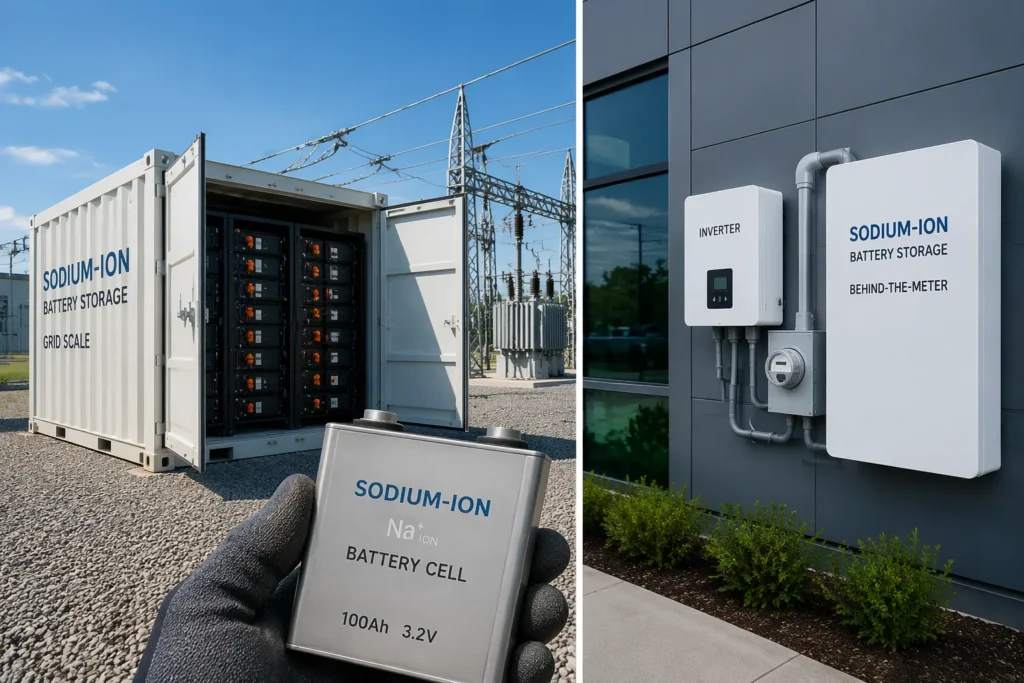
Grid-Scale Storage vs. Behind-the-Meter Storage: Where Sodium-Ion Cells Fit Best Facebook Youtube Table of Contents Sodium-Ion Cells Fit Best in grid-scale storage for steady, long-lasting jobs. They also suit behind-the-meter storage at sites with space limits, safety worries or tight budgets. Each scale rewards different strengths. Grid-scale projects value long cycle life and plenty of…
3 Reasons Sodium-Ion vs Lithium Battery Cost Is Lower
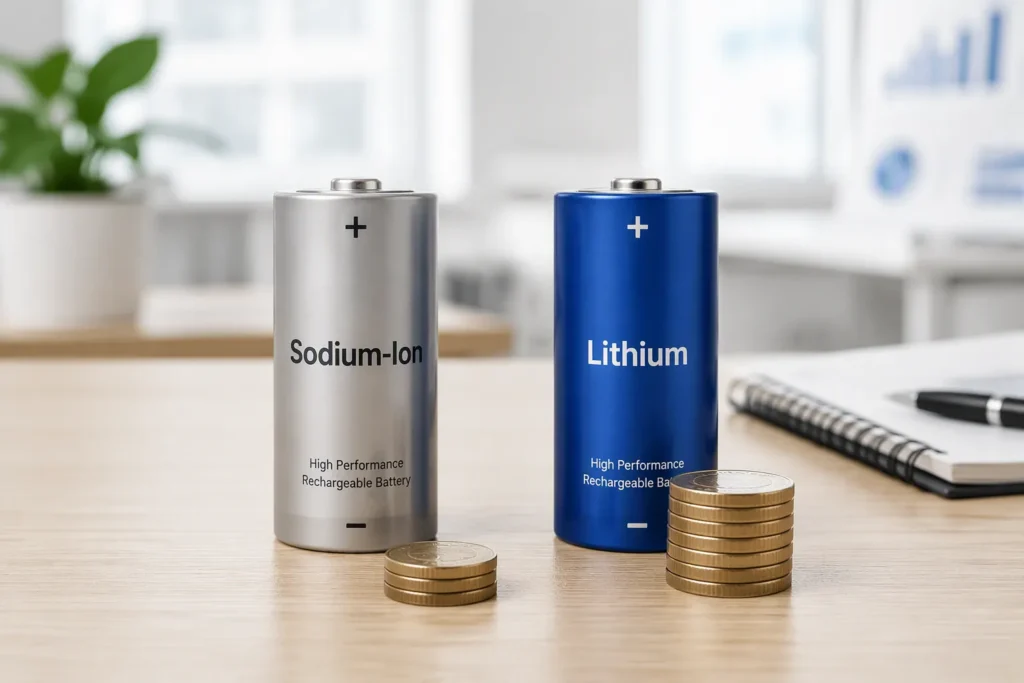
3 Reasons Sodium-Ion vs Lithium Battery Cost Is Lower Facebook Youtube Table of Contents Sodium-ion batteries cost less than lithium-ion batteries for three main reasons. First, sodium-ion batteries use raw materials that are cheaper and easier to find. Second, their parts and production cost less. Third, they save money at the system level in the…
Can sodium-ion batteries be shipped at 0V?
Can sodium-ion batteries be shipped at 0V? Facebook Youtube Table of Contents Yes, sodium-ion batteries shipped at 0V are possible, but only under certain conditions. The answer depends on three things: cell design, UN 38.3 testing and carrier acceptance. If any one of these is wrong, your shipment may not move. Some sodium-ion cells can…
Are Sodium-Ion 12V Batteries a True Drop-In Replacement for Lead-Acid?
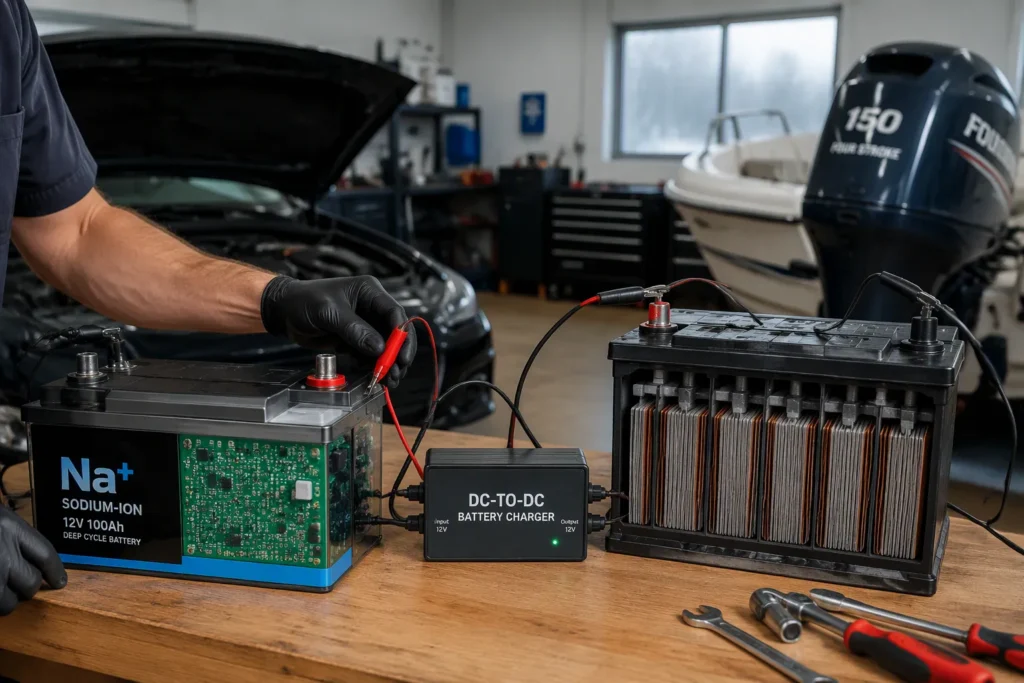
Are Sodium-Ion 12V Batteries a True Drop-In Replacement for Lead-Acid? Facebook Youtube Table of Contents Can you swap a lead-acid 12V battery for a sodium-ion one without touching your equipment, charger, or wiring? The honest answer is: it depends. This isn’t a simple yes or no. A true drop-in only works when a few conditions…
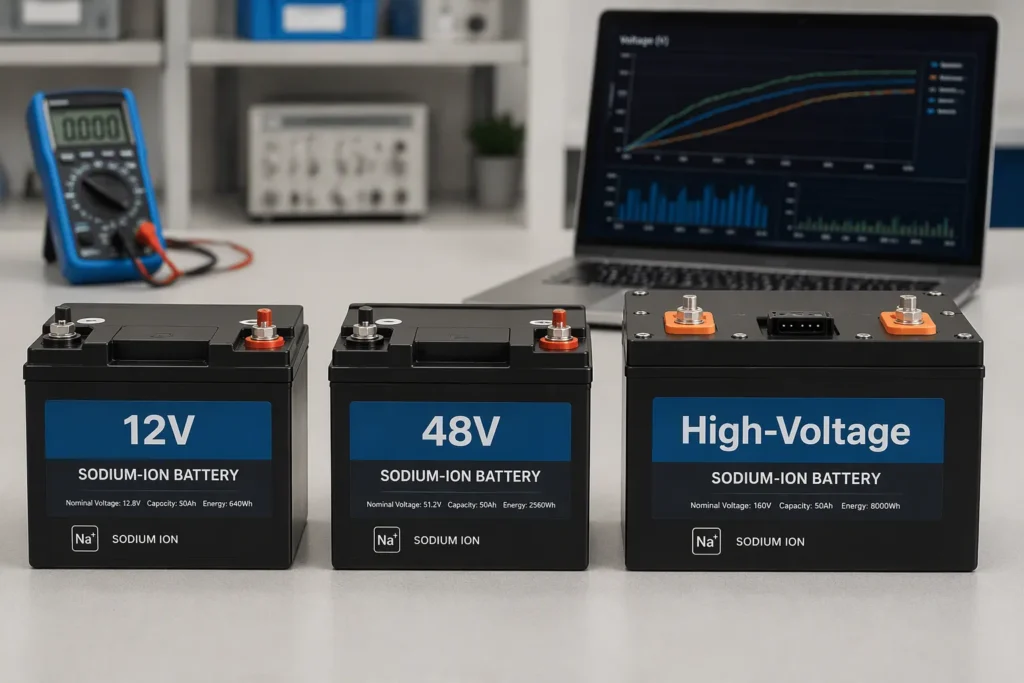
Sodium-ion battery module: 12V vs 48V vs high-voltage
Sodium-ion battery module: 12V vs 48V vs high-voltage Facebook Youtube Table of Contents No single voltage suits every sodium-ion battery module. The right choice follows the application. A 12V unit serves small standalone systems and drop-in replacement duties. A 48V pack fits light mobility and modest stationary storage. High voltage suits larger traction and grid-connected…
