
 Skip to content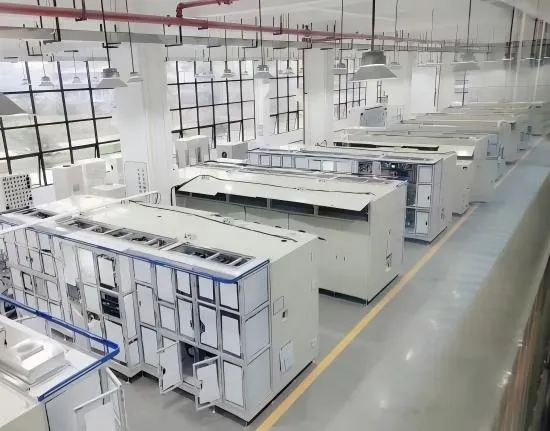
 As global demand for Battery Energy Storage Systems (BESS) continues to rise, battery buyers are paying closer attention to one critical component: the cathode material.
While sodium-ion batteries are increasingly recognized as a promising alternative to lithium-ion batteries, not all sodium-ion chemistries are the same.
Today, most commercial sodium-ion battery cells use one of two cathode technologies:
Layered Oxide Cathodes (TMO-based)
NFPP Cathodes (Sodium Iron Pyrophosphate)
For battery manufacturers, ESS developers, telecom operators, and industrial users, understanding the difference between these technologies is important when evaluating battery safety, cycle life, operating cost, and long-term reliability.
 Suggested Image
A comparison graphic showing NFPP cathode structure vs layered oxide structure.
NFPP stands for:
Sodium Iron Pyrophosphate (Na₄Fe₃(PO₄)₂P₂O₇)
It is a phosphate-based cathode material used in sodium-ion battery cells.
Unlike traditional layered oxide cathodes, NFPP uses a more stable three-dimensional crystal framework that experiences less structural stress during charging and discharging.
This stability is one reason why NFPP is attracting attention in commercial energy storage applications.
 High structural stability
Excellent thermal stability
Long cycle life
Strong low-temperature performance
Abundant raw material availability
Suitable for large-scale energy storage
The cathode directly affects:
Battery safety
Cycle life
Energy density
Operating temperature range
Internal resistance
Maintenance costs
For applications such as:
 Industrial Energy Storage
 Solar Energy Storage Systems
 Telecom Backup Power
 Starter Batteries
 Utility-Scale Energy Storage
The wrong cathode choice can significantly increase total ownership costs over the lifetime of the battery system.
Safety remains one of the most important factors in battery energy storage systems.
Layered oxide cathodes can experience structural degradation under extreme operating conditions, particularly during repeated cycling and thermal stress.
NFPP cathodes benefit from a phosphate framework that is inherently more stable.
Applications requiring continuous operation include:
Data centers
Utility storage projects
Telecom base stations
Commercial ESS installations
In these environments, battery safety often takes priority over maximum energy density.
Suggested Image
Thermal stability comparison chart between NFPP, lithium iron phosphate (LFP), and layered oxide sodium-ion batteries.
One of the primary reasons many system integrators evaluate sodium-ion battery technology is longevity.
Repeated charge and discharge cycles gradually damage battery materials.
NFPP’s stable structure helps reduce this degradation.
| Technology | Typical Cycle Life Trend |
|---|---|
| Lead-Acid Battery | Lowest |
| Conventional Lithium-ion | Medium |
| Sodium-ion Layered Oxide | Higher |
| NFPP Sodium-ion Battery | Highest Stability |
Longer cycle life can reduce:
Replacement frequency
Maintenance costs
System downtime
This is particularly important for battery energy storage systems operating daily.
 Cold-weather operation is a major challenge for many battery technologies.
Lithium-ion batteries often experience noticeable capacity loss at low temperatures.
Sodium-ion batteries generally perform better under cold conditions because sodium ions move more efficiently in low-temperature environments.
NFPP-based sodium-ion battery cells are increasingly considered for:
Northern Europe
Canada
Nordic countries
Mountain communication stations
Airport backup systems
✔ Telecom towers
✔ Outdoor ESS systems
✔ Remote infrastructure
✔ Emergency backup power
Heat generation affects battery efficiency and lifespan.
Higher internal resistance typically results in:
 More energy loss
Faster degradation
Increased cooling requirements
NFPP cathode systems are often valued for their low internal resistance characteristics, which can help reduce operational heat generation during high-rate charging and discharging.
For industrial users, this can simplify thermal management requirements.

Not every battery application requires maximum energy density.
Many commercial users prioritize:
Safety
Durability
Reliability
Long service life
NFPP technology is particularly suitable for these sectors.
Daily cycling
Long project lifespan
Reduced maintenance
Frequent charging and discharging
Long-term outdoor operation
Reliability during outages
Wide temperature tolerance
High-rate discharge capability
Reliable cold-weather starting
Large-scale deployment
Long-term operating economics
Suggested Image
Containerized battery energy storage system using sodium-ion battery technology.
No battery technology is perfect.
A balanced evaluation should also consider limitations.
Compared with advanced lithium-ion batteries, most sodium-ion batteries provide lower energy density.
This means:
Larger battery volume
Increased system footprint
However, for stationary energy storage applications, space is often less important than safety and lifespan.
The sodium-ion battery industry is still growing.
Compared with lithium-ion batteries, supply chains and supporting infrastructure remain less mature.
However, adoption is expanding rapidly in energy storage applications worldwide.
When selecting a sodium-ion battery manufacturer, battery chemistry is only one part of the decision.
Other important factors include:
Automated production lines
Cell consistency
Quality control systems
 OEM battery manufacturing
ODM battery development
Application-specific customization
 Large-volume production capability
Long-term delivery support
Stable manufacturing capacity
These factors become increasingly important for projects requiring hundreds of thousands or millions of battery cells.
Veken focuses on the development and manufacturing of sodium-ion battery cells and battery solutions for energy storage and starter battery applications.
Its sodium battery portfolio includes:
Sodium-ion cylindrical cells
Sodium-ion prismatic cells
NFPP-based battery technology
OEM battery manufacturing
ODM battery solutions
The company continues expanding sodium-ion battery production capacity to support growing global demand for safe and long-life energy storage technologies.
 Sodium Battery Solutions:
https://vekenindustry.com/sodium-battery/
Contact Veken:
https://vekenindustry.com/contact-us/
As sodium-ion battery adoption accelerates, cathode selection is becoming increasingly important.
Compared with conventional layered oxide cathodes, NFPP technology offers several advantages for commercial and industrial applications:
Higher structural stability
Improved thermal safety
Long cycle life
Strong low-temperature performance
Lower maintenance requirements
While energy density remains lower than some lithium-ion alternatives, NFPP-based sodium-ion batteries are emerging as a practical choice for Battery Energy Storage Systems, telecom backup power, utility storage projects, and starter battery applications.
For organizations prioritizing safety, reliability, and lifecycle value, NFPP cathode technology is becoming one of the most closely watched developments in the sodium-ion battery industry.
 Optimized by Seraphinite Accelerator